Understand the environment first
The assessment considers occupancy, air-handling configuration, high-touch locations, sensitive equipment, cleaning routines, downtime limits and the practical goal of the programme.
System overview
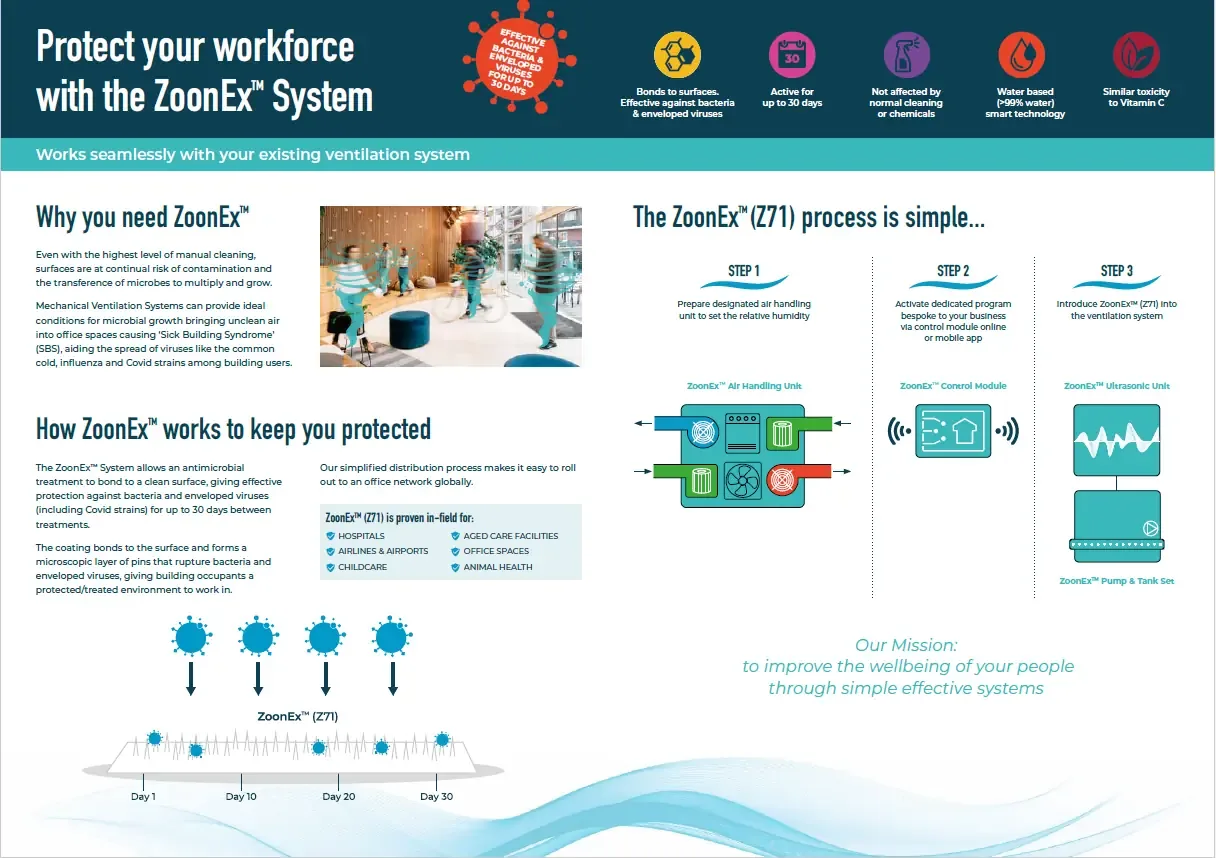
Zoonex combines facility assessment, fine-mist dispersal, ventilation-compatible delivery and targeted surface application within one structured hygiene programme.
The process
Select each stage to see how the treatment journey is planned from the first review through to ongoing maintenance.
The assessment considers occupancy, air-handling configuration, high-touch locations, sensitive equipment, cleaning routines, downtime limits and the practical goal of the programme.
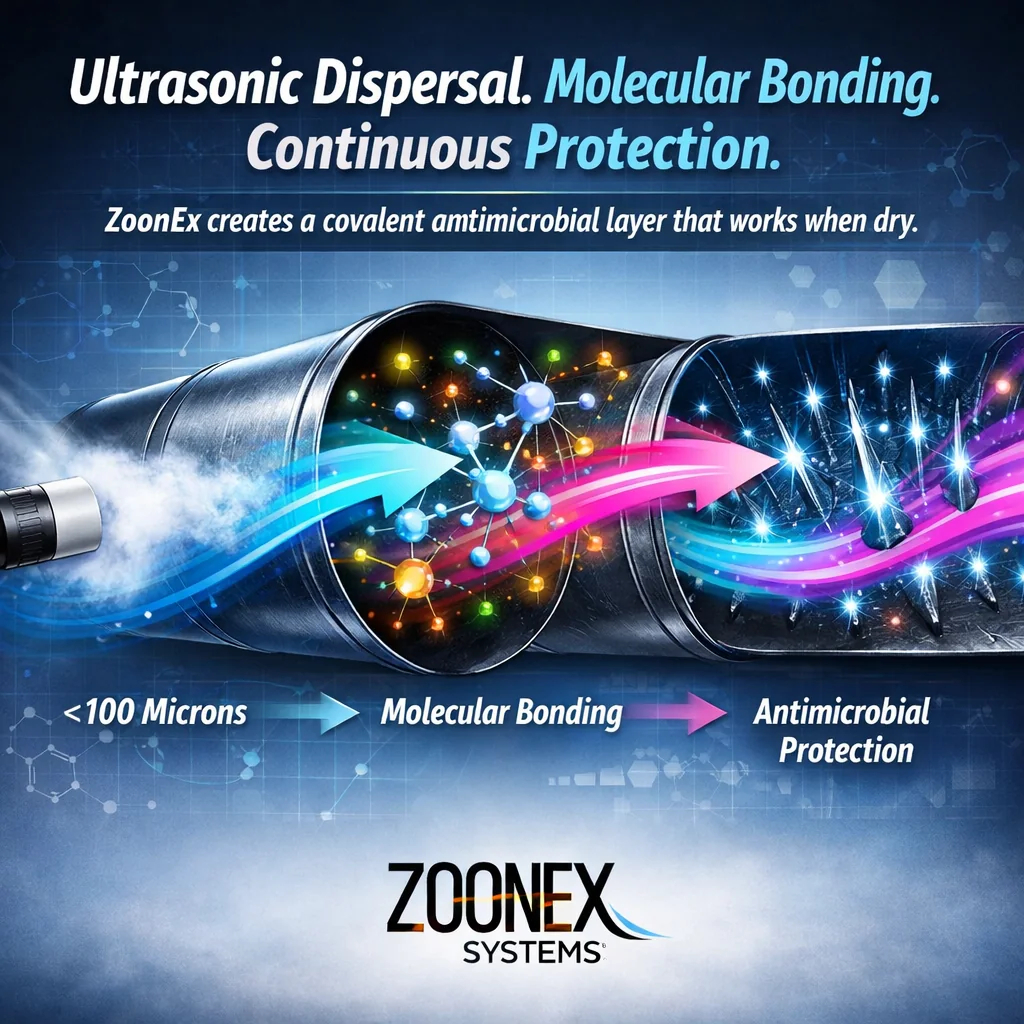
The appropriate equipment is selected to transform liquid treatment into a fine dispersal suitable for the planned application route and treatment zone.
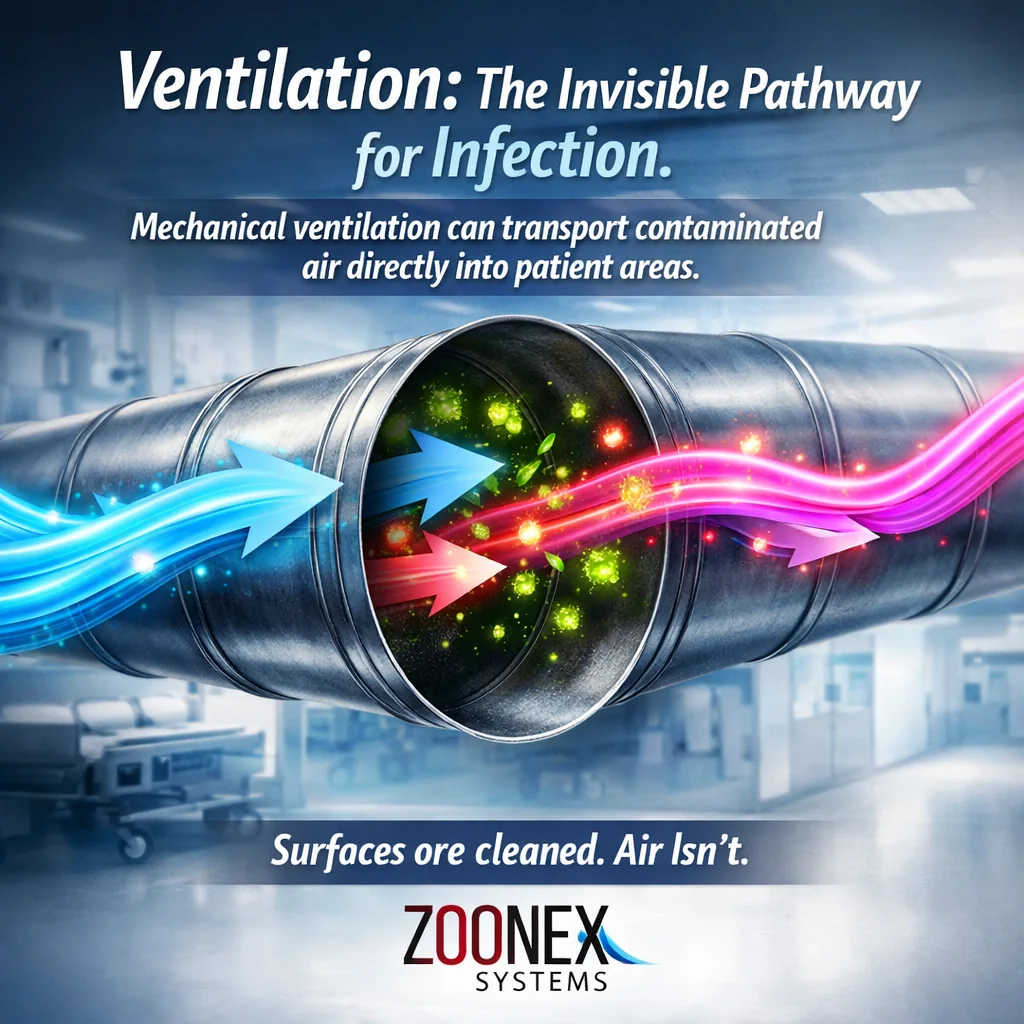
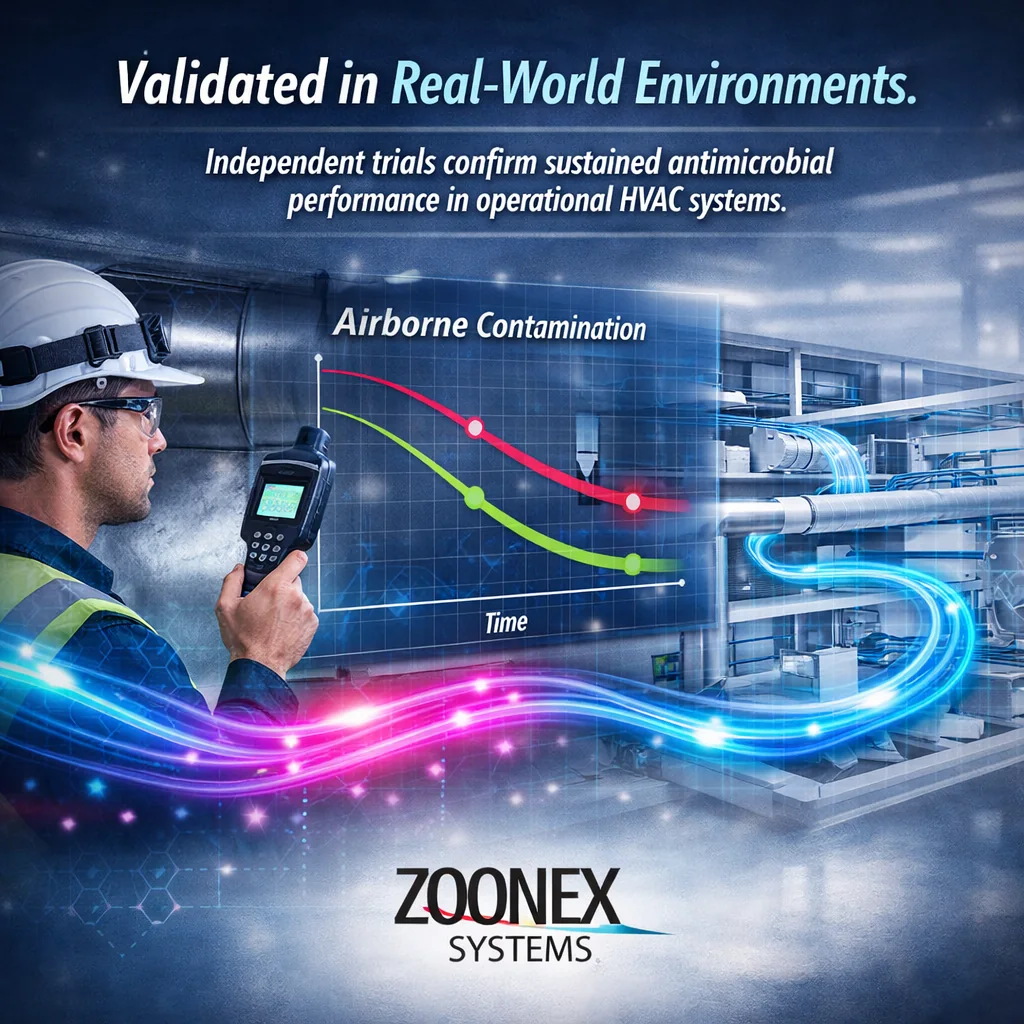
Where a ventilation-system approach is suitable, controlled airflow helps carry treatment through selected pathways. Other zones may use targeted spraying or ULV fogging.
Treatment records, area schedules, product information and repeat planning help keep the programme aligned with routine cleaning and facility operations.
Application methods
Zoonex is not limited to one machine or one room. Delivery is selected according to the facility and treatment objective.
Designed for suitable air-handling and duct pathways where controlled distribution supports the treatment plan.
Fine-droplet application for suitable large-area or hard-to-reach zones under controlled treatment conditions.
Targeted surface coverage for suitable equipment, touchpoints and complex shapes.
Scheduled applications, reporting and review designed around operational continuity.
Important distinction
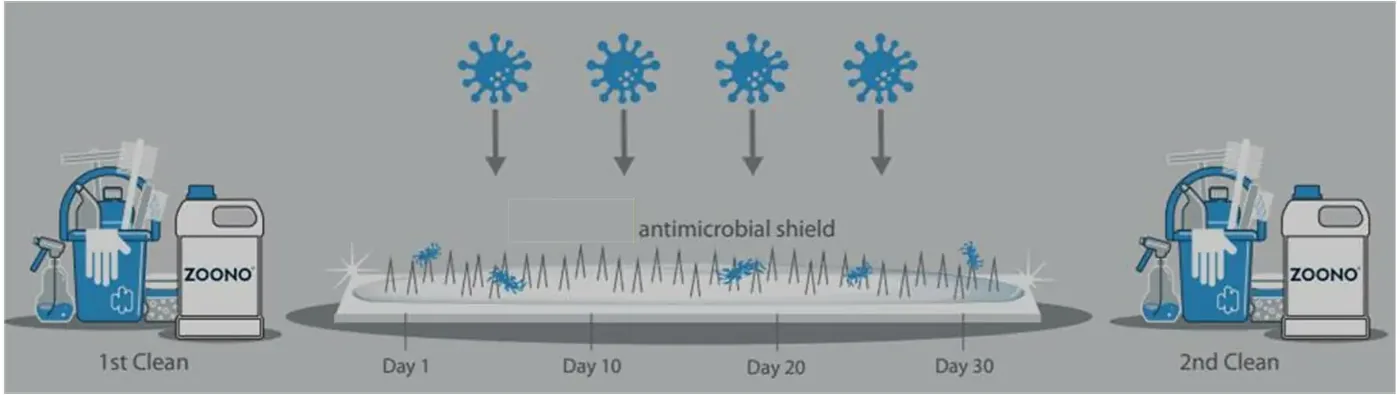
Routine cleaning removes soil and contamination. Disinfection addresses defined targets at the time of application. Long-lasting surface treatment is intended to add another layer within that overall hygiene system.
A site review is the best way to establish whether ventilation delivery, targeted application or a combined programme fits your facility.