
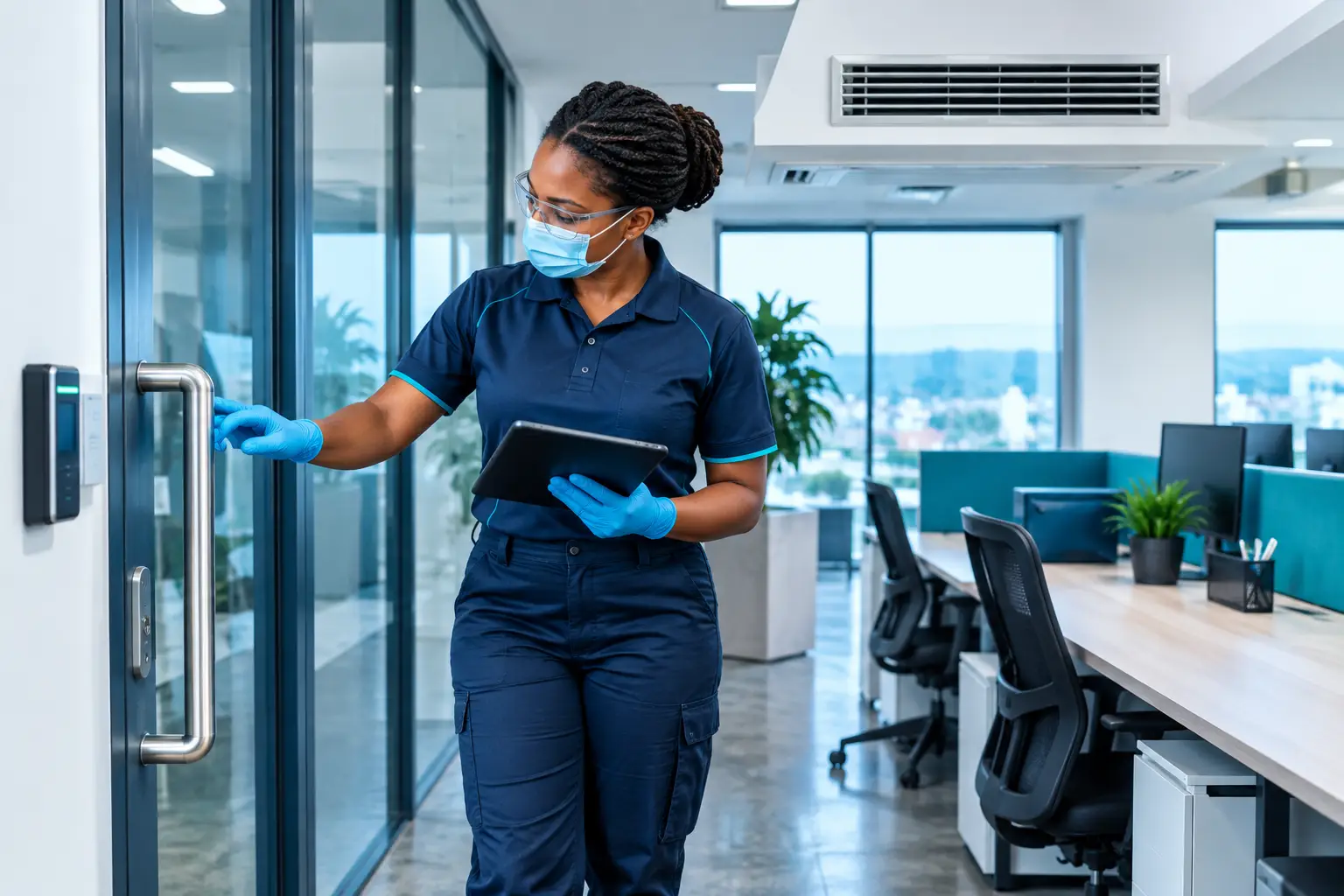
A ventilation system can move air through reception areas, wards, kitchens, production floors, cabins and back-of-house spaces long after routine cleaning has finished. That is why maintaining ventilation hygiene programmes is a practical operational question, not simply a cleaning question. Where air pathways, shared spaces and high-touch activity overlap, hygiene controls need to account for how a facility actually functions.
A programme brings ventilation routes into the same hygiene plan as surfaces, touchpoints, equipment and occupied zones. It creates a managed rhythm of assessment, controlled treatment and review rather than relying on isolated responses after a concern has already disrupted operations.
Why maintain ventilation hygiene programmes over time?
Ventilation is part of the physical environment that shapes contamination risk. Supply and return routes, grilles, ducts, filters, fan sections and air handling equipment all influence where air travels and which spaces are connected. The significance varies by building: a small hospitality venue has different airflow pressures from a hospital wing, an agricultural facility or an airport operations area. In each case, however, ventilation should not be treated as an invisible service that sits outside the hygiene strategy.
Routine cleaning remains essential, but it is usually focused on accessible surfaces. Ventilation pathways are less visible, more difficult to reach and affected by changing occupancy, maintenance activity, weather, room use and operating hours. A managed hygiene programme recognises these conditions and plans treatment around them.
The value is not a claim that treatment makes a building sterile or removes the need for established controls. It is the ability to manage an often-overlooked protection pathway with greater discipline. Cleaning, ventilation maintenance, hand hygiene, infection-prevention procedures and site-specific operational controls continue to have distinct roles.
The operational case for a planned programme
Facilities are rarely static. A meeting room becomes a training venue, a guest corridor carries a different volume of traffic during peak season, or a processing area changes shift patterns. These changes affect occupancy density, cleaning windows and the way air is drawn through a building.
A once-off intervention may be appropriate after refurbishment, a change in use, an identified hygiene concern or before reopening a space. It can address an immediate requirement. It does not, on its own, create a process for reviewing whether the environment, access constraints or risk profile has changed. Ongoing maintenance provides that process.
For facilities managers, this matters because unplanned work is disruptive. Access to ceiling voids, plant rooms, operational areas and occupied rooms may require permits, scheduling and coordination with several teams. A planned programme makes these requirements visible in advance. It allows treatment and inspection activity to be aligned with low-occupancy periods, planned shutdowns and existing maintenance schedules where feasible.
Documentation is equally useful. Clear records of assessed zones, application methods, treatment dates, operational limitations and follow-up actions give site teams a more reliable basis for internal reporting and contractor coordination. The detail required will depend on the facility and applicable procedures, but the principle is consistent: hygiene activity should be traceable, not assumed.
Protection that moves through the building
The central challenge is distribution. A facility may have a well-managed cleaning routine at entrances, washrooms and touchpoints while airflow continues to connect spaces beyond those visible areas. Protection that moves through the building needs to be designed with those routes in mind.
This does not mean every ventilation system requires the same treatment frequency or approach. A building with simple local extraction has different needs from a multi-zone HVAC installation. The right scope depends on the system layout, access points, occupancy, the nature of work taking place, surface types, cleaning practices and the consequences of operational interruption.
Engineered antimicrobial programmes consider the relationship between these factors. In appropriate settings, controlled dispersal methods such as ultra-low-volume fogging may support coverage of defined treatment zones. Targeted antimicrobial surface application can address selected touchpoints, equipment exteriors and high-traffic areas. Ventilation-pathway treatment focuses attention on the physical routes that influence air movement. One system, multiple protection pathways.
Application must always be selected and conducted by competent professionals according to the site assessment, product documentation, test scope and operational controls. Sensitive equipment, occupied spaces, food-service areas, healthcare environments and agricultural operations each require careful consideration. The method should fit the environment, not a generic checklist.
A four-stage method for ventilation hygiene
An effective programme can be understood through four connected stages: assess, disperse, distribute and maintain. The sequence matters because treatment without a clear picture of the environment can create gaps, unnecessary disruption or poorly defined expectations.
Assess the building as it operates
Assessment begins with the building, not the product. Teams examine airflow routes, HVAC components, room use, occupancy patterns, accessible and restricted areas, surfaces, cleaning arrangements and timing constraints. They also establish who needs to be involved: facilities, operations, environmental health, infection-prevention, engineering, security or external maintenance providers.
This stage identifies practical limits. Some zones can be treated during normal downtime; others may need isolation, a permit process or coordination with specialist contractors. A useful assessment does not merely list rooms. It maps how the facility works and where treatment can be applied responsibly.
Disperse treatment under controlled conditions
Dispersal concerns the chosen application method and how it is managed. It may involve targeted surface treatment, controlled ULV fogging in suitable zones, ventilation-route application or a combination of methods. The decision should reflect the required reach, the material compatibility considerations, access conditions and the site’s operating procedures.
There are trade-offs. A broader dispersal approach may suit large or complex areas, but it requires more careful planning around occupancy, ventilation status and re-entry arrangements. Direct application may be better suited to defined touchpoints and equipment surfaces, yet it may not address connected pathways. Programme design balances coverage with control.
Distribute through relevant pathways
Distribution is the engineering question: where does the treatment need to reach? In a ventilation-led programme, that may include identified air routes and adjacent operational zones. In a hospitality setting, the focus may extend from air handling areas to reception, lifts, corridors and back-of-house spaces. In a fleet or aviation context, cabins, service zones and shared contact surfaces may require a separate treatment plan from maintenance areas.
The purpose is to avoid treating each space as if it were isolated. Airflow, people, equipment and work processes connect them. Understanding those links enables a more coherent hygiene plan.
Maintain and review the programme
Maintenance turns treatment into an operational discipline. Review intervals should be based on site conditions rather than a fixed promise. High occupancy, seasonal demand, building works, changes to ventilation performance, an altered cleaning contractor or a new operating layout can all justify reassessment.
The maintenance stage also provides an opportunity to refine the programme. If access windows are proving impractical, treatment may need to be scheduled differently. If a zone has changed use, the assessed risk and treatment method may need adjustment. This is where a managed programme earns its value: it can respond to the facility rather than forcing the facility to fit a standard process.
Where programmes add practical value
In healthcare and care environments, the priority is often coordination with established infection-prevention and facilities procedures. Treatment planning must respect patient-facing activity, sensitive zones and engineering controls.
For commercial property and hospitality operators, continuity and guest experience often drive the brief. The programme may need to work around tenants, functions, check-in periods, housekeeping cycles and restricted plant access. In food-service settings, the treatment plan must be carefully aligned with the site’s own food safety and cleaning controls.
Agricultural, veterinary and biosecurity environments introduce different pressures, including vehicle movement, changing operational zones and animal-management protocols. Aviation and fleet operations similarly combine confined shared spaces, rapid turnarounds and maintenance requirements. The common principle is not a standard application. It is a site-specific plan that connects ventilation, surfaces and operational reality.
Make ventilation hygiene part of facilities management
Ventilation hygiene works best when it is discussed alongside planned maintenance, cleaning verification, contractor access and business continuity. It should not sit in a separate file that is opened only when there is a concern. Bringing it into regular facilities reviews helps teams identify changes before they become urgent scheduling problems.
For South African facilities operating across demanding climates, high occupancy periods and varied building stock, the practical question is not whether every site needs the same programme. It is whether the current hygiene plan reflects the routes through which people, air and activity move. Zoonex Systems approaches that question through assessment, controlled deployment and documented managed maintenance.
A useful next step is to walk the site from an airflow and operations perspective: identify what connects spaces, what changes through the week, and where routine cleaning cannot reasonably reach. That view often turns ventilation hygiene from an overlooked task into a clearer, more manageable part of facility resilience.
